July 4th Independence Day Backgrounds: A Comprehensive Evaluation
The digital design landscape offers a vast array of resources for creators, but few are as seasonally specific and visually distinct as July 4th Independence Day Backgrounds. These assets are specifically curated to capture the essence of American patriotism through structured patterns, textures, and vector graphics. When evaluating a collection that features red, white, and blue stars, stripes, plaid, and flannel shirt fabric textures, it is essential to understand not just what the files contain, but how they fit into professional and personal workflows.
This analysis explores the utility of these digital papers, focusing on their technical specifications, creative applications, and the practical considerations involved in selecting them for various projects. Whether you are a graphic designer, a crafter, or a small business owner, understanding the capabilities of this set helps determine if it aligns with your specific needs.
Understanding the Asset Composition
At its core, a July 4th Independence Day Background set is a digital library of repeatable textures and solid patterns designed to serve as the foundation for visual compositions. The specific collection described here distinguishes itself by combining traditional geometric motifs with tactile fabric simulations. Users can expect to find:
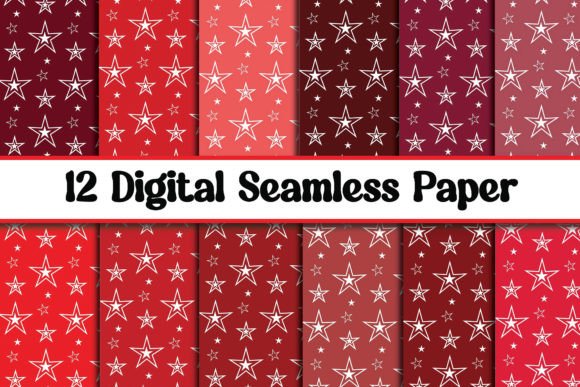
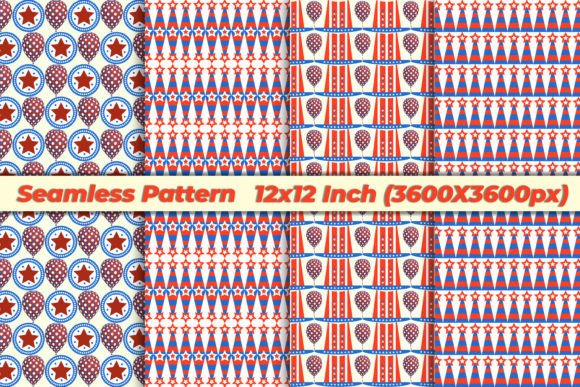
- Patriotic Patterns: Classic arrangements of stars and stripes that adhere to color theory standards for national holidays.
- Plaid and Flannel Textures: Digital representations of woven fabrics that add depth and a rustic aesthetic to designs.
- Vector Graphics: Scalable elements like stars that remain crisp at any size.
The inclusion of both EPS (Encapsulated PostScript) and PNG (Portable Network Graphics) formats is a critical feature of this asset type. The presence of six EPS files sized at 12 inches by 12 inches provides vector-based flexibility, allowing users to scale images without loss of quality. Conversely, the six PNG files, rendered at 3600 x 3600 pixels with a resolution of 300 DPI, offer high-fidelity raster images suitable for immediate use in print and web environments where vectors cannot be utilized.
Primary Applications and Use Cases
The versatility of these backgrounds stems from their adherence to a widely recognized color palette and thematic style. They are particularly effective in scenarios requiring immediate brand alignment with national holidays. Below are the primary sectors where these assets provide significant value:
Crafting and Physical Production
For hobbyists and professionals in the crafting industry, the high-resolution nature of the 300 DPI PNGs makes them ideal for physical production. These files are optimized for printing on demand, making them suitable for:
- Scrapbooking and Cardmaking: Creating layered cards or journal pages that require textured backgrounds.
- DIY Home Decor: Applying decoupage techniques to furniture, tags, or packaging materials.
- Event Planning: Generating custom invitations, place cards, and banners for weddings, birthdays, and parties.
Digital Design and Branding
In the digital realm, the vector EPS files offer distinct advantages. Designers can manipulate the stars and stripes independently, resizing them to fit logos or social media headers without pixelation. This is crucial for:
- Social Media Banners: Ensuring crisp visuals across mobile and desktop interfaces.
- Business Materials: Integrating patriotic themes into business cards, logos, and stationery.
- Web Content: Using the patterns as section dividers or background overlays for websites and blogs.
Evaluating Benefits and Tradeoffs
Selecting a pre-made background set involves weighing the efficiency of ready-to-use assets against the need for unique customization. Understanding these tradeoffs helps in making an informed decision.
Key Benefits
The most significant advantage of using a dedicated July 4th Independence Day Background set is time efficiency. Instead of manually constructing complex plaid weaves or calculating star spacing, designers gain immediate access to professionally arranged patterns. The inclusion of a "pattern tile" swatch ensures that the designs can be seamlessly repeated, eliminating visible seams in large-scale prints. Furthermore, the compressed ZIP format simplifies file management, ensuring all necessary components are delivered in a single package.
Considerations and Limitations
While efficient, there are limitations to consider. Pre-made patterns may lack the uniqueness required for high-end branding where distinctiveness is paramount. If a project demands a completely original look, these assets might feel too generic. Additionally, the reliance on standard red, white, and blue palettes limits the ability to create a muted or alternative color scheme without extensive post-processing. Users must also be aware of the extraction requirement; while modern operating systems handle ZIP files easily, older systems or specific software environments may require manual extraction before the files can be accessed.
Situational Fit and Alternatives
To determine if this resource is appropriate, one must evaluate the specific goals of the project.
When this set is a strong fit:
This collection is ideal for rapid turnaround projects where thematic accuracy is more important than absolute originality. It is perfect for seasonal marketing campaigns, community event flyers, and personal craft projects where the goal is to celebrate the holiday quickly and effectively. The mix of fabric textures and geometric shapes allows for diverse stylistic approaches within a single cohesive theme.
When alternatives may be worth considering:
If the project requires a highly stylized, non-traditional interpretation of independence day, or if the user needs specific colors outside the standard patriotic spectrum, custom illustration services or broader pattern libraries might be better suited. Similarly, for projects requiring extremely large format printing (such as billboards), even 300 DPI files may require upscaling, which could introduce artifacts. In such cases, sourcing vector-only assets from a larger stock agency might provide more control over the final output.
Practical Decision-Making Insights
Before committing to this digital paper set, potential users should verify their workflow requirements against the file specifications provided. The distinction between the 12x12 inch EPS files and the 3600x3600 pixel PNG files is vital. If the intended output is large-format printing, the 300 DPI resolution of the PNGs is generally sufficient, but the vector EPS files offer the safety net of infinite scalability. For web use, the smaller PNG versions are likely unnecessary given the lower resolution requirements of screens, suggesting that the EPS files would be the superior choice for digital scaling.
Furthermore, the organization of the files matters. Since the content is compressed into a single ZIP file, users should ensure they have adequate storage space and the ability to extract files directly or via double-clicking. This step is often overlooked but is essential for accessing the assets immediately upon download.
In conclusion, a July 4th Independence Day Background set featuring stars, stripes, and flannel textures serves as a robust tool for a wide range of creative endeavors. By offering both vector and raster options, it bridges the gap between digital editing and physical printing. While it may not replace the need for custom design in every scenario, it provides a reliable, high-quality foundation for anyone looking to incorporate patriotic aesthetics into their work efficiently.